
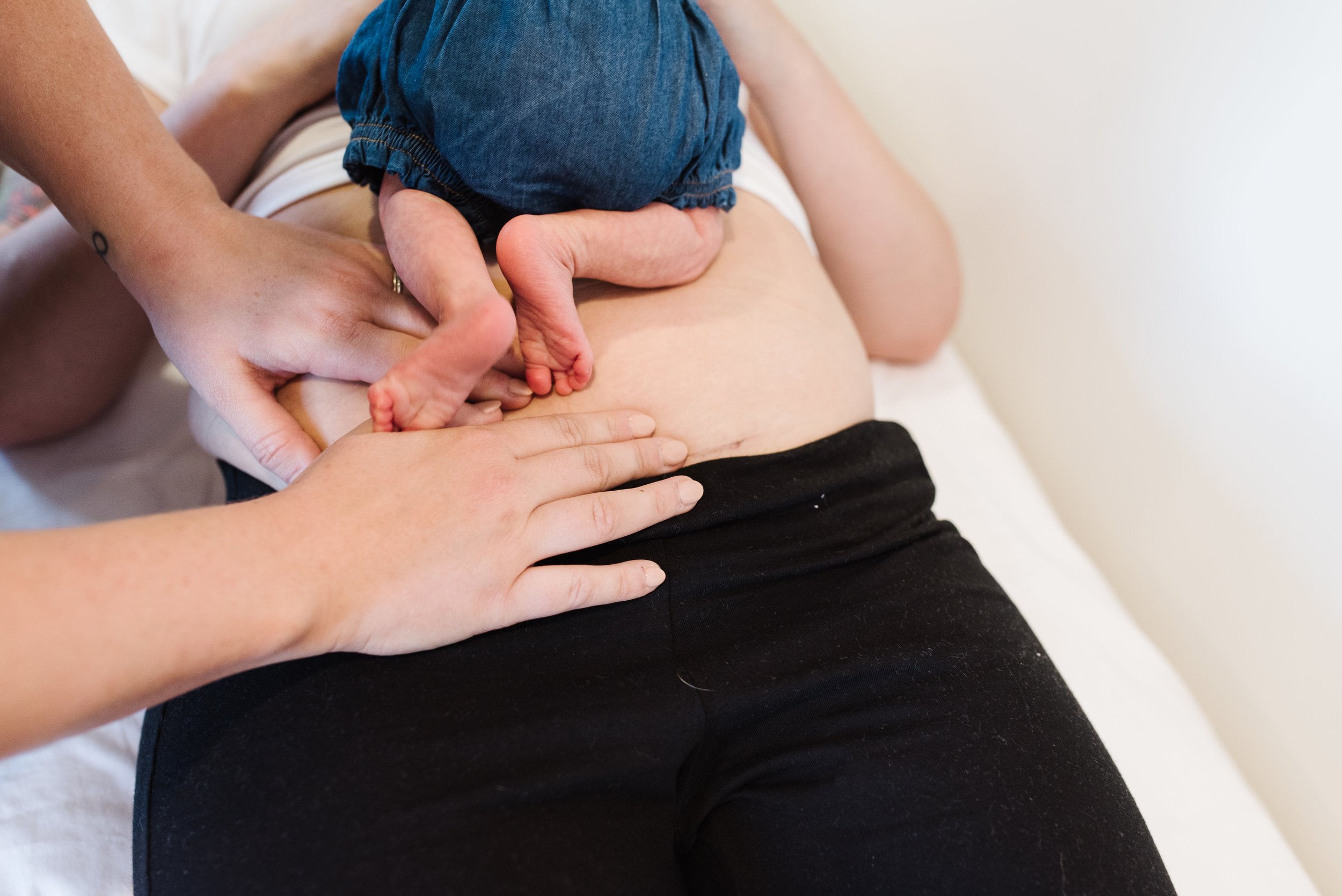
Myofascial release for women & babies in Goirle
Slow, gentle, hands on bodywork for women and babies.
About Myofascial Release
What is myofascial release?
Myofascial release is hands-on bodywork that works with your fascia
Fascia is the spiderweb-like connective tissue that runs through your entire body. It wraps around every muscle, bone, nerve, and organ, and it does not stop at any one body part. It is one continuous web, from the top of your head to the soles of your feet.
When fascia is healthy, it glides. When it is not, it grips.
Pregnancy, birth, surgery, scars, injury, illness, and years of holding tension all leave restrictions in that web. The tissue stops moving freely and starts pulling on whatever it is attached to.
The pain is often not where the problem is
Because fascia is one connected system, a restriction in one place can be felt somewhere else entirely. A cesarean scar that pulls into low back pain. Old hip tightness that shows up as neck tension. A jaw that will not relax because the ribs and diaphragm are not moving well.
This is why treating only the painful spot tends to give short lived relief. We work with the whole system instead, following the restriction back to where it starts.
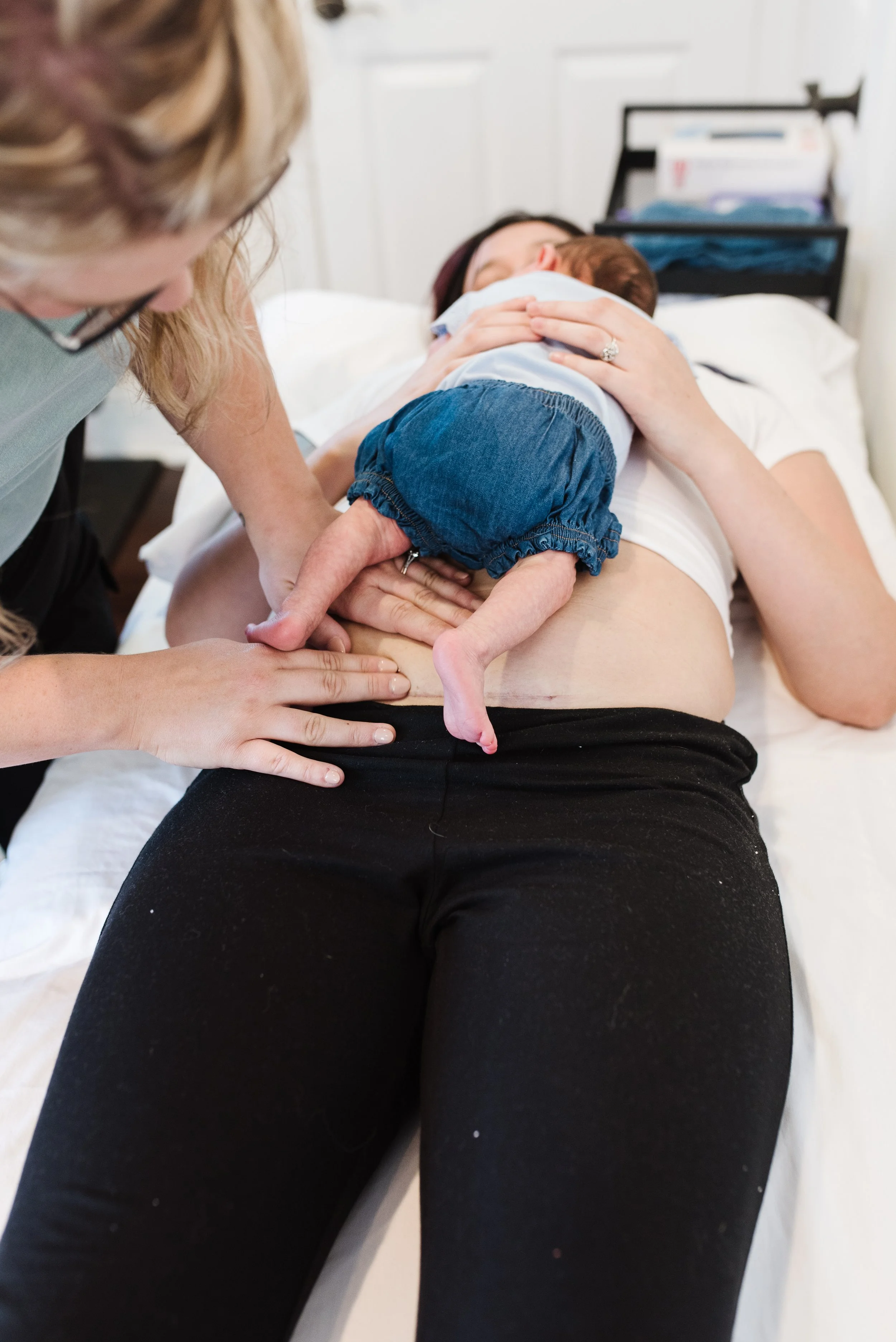
What does myofascial release feel like?
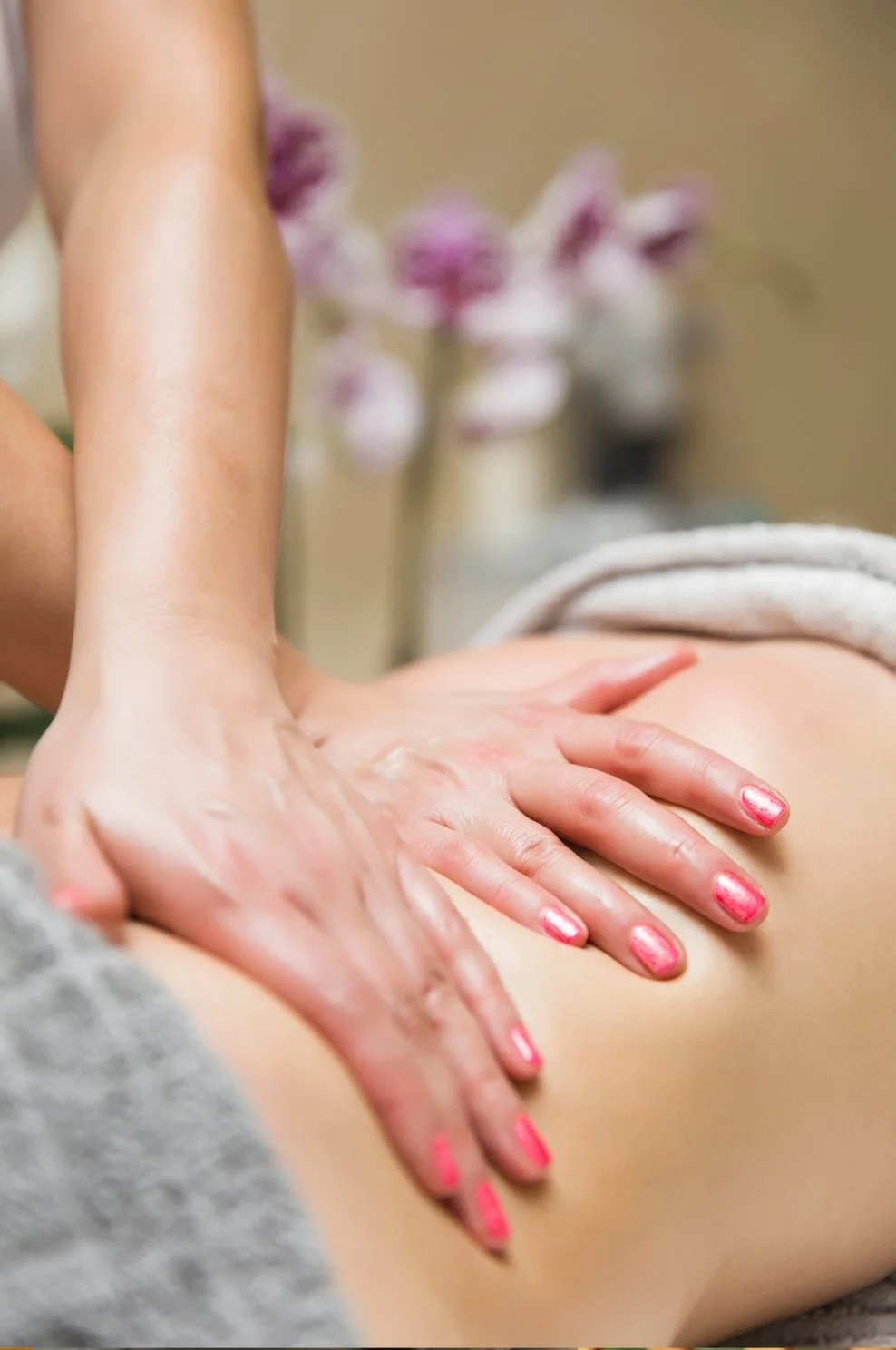
We place our hands on your skin, apply gentle pressure, and wait. Most of the work uses no oil and no sliding, because much of fascia does not respond to force. It responds to time. A single hold might last three to five minutes, sometimes longer. Some spots feel like a stretch, some feel warm, and some feel like nothing at all until something quietly lets go. Many people fall asleep.
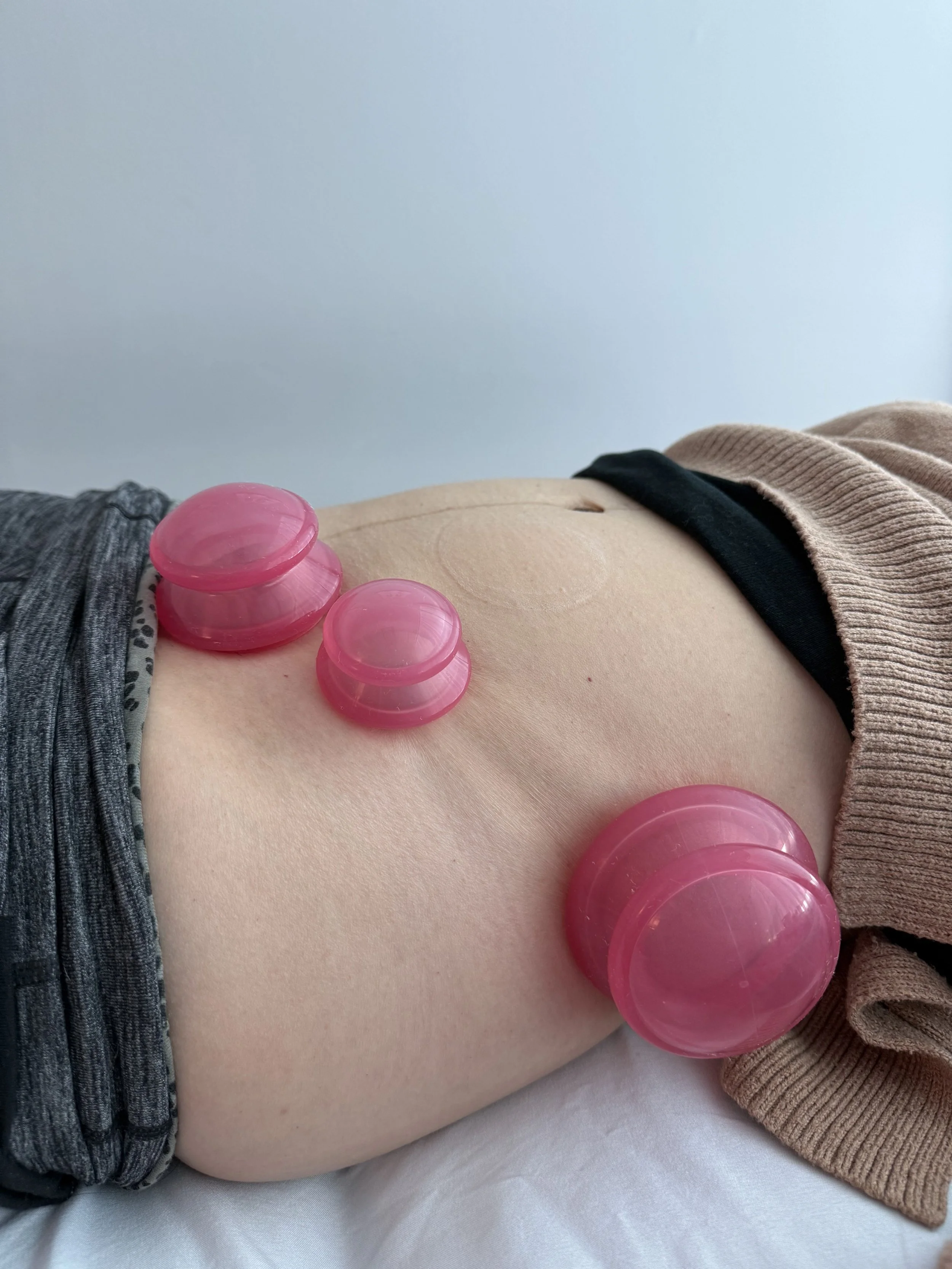
Other myofascial release methods that we use on adults include cupping, which feels like a gentle pull rather than a push. Trigger point work is more direct and more specific, though still nothing like a deep tissue massage. What we use depends on your body and what it responds to, and we will always tell you what we are about to do and why.
Slower than most people expect
What methods of myofascial release do we use at Luma?
The John Barnes approach is the foundation, and it is one of the main methods Danika trained in.
However, no single technique answers everything, so we draw on others alongside it: silicone cupping, which lifts and decompresses tissue rather than pressing into it and works well over scars, and trigger point work, using hands or tools, for the specific tender points that refer pain elsewhere, and kinesiotape to lengthen results.
It depends on the person
How it Works
Sessions take place in our studio in Goirle, a private room upstairs in our home. We are about 15 minutes from Tilburg centrum by bike or car, and 25 minutes by bus from Tilburg Centraal, with parking on the street outside
We start by talking. Your history, your symptoms, your births if you have had them, and what your body is doing that brought you here.
We start with an assessment
Then we look at how you move and where the tissue seems to be “sticking”. Danika will instruct you through a series of movements that gives her a good idea of where the areas of the body are that she should start with.
We observe how you move
We release tension
Then we work. You can stay in your own clothing if you prefer, or undress to comfort. We need skin contact at the area we are working on, usually the abdomen, back, or hips, and we will always ask before moving anything.
We do not diagnose. We do not perform internal assessment or treatment. We do not treat medical conditions, and we are not a replacement for your huisarts, gynaecoloog, verloskundige, or bekkenfysiotherapeut.
If what you need sits outside this work, we will tell you and help you find the right person.
Who We Work With
We specialize in myofascial release for women and babies.
Women
Through pregnancy, postpartum, chronic conditions, and perimenopause. Common reasons women come to us:
Pelvic, hip, and low back pain
Scar tissue from a cesarean, a tear, or abdominal surgery
Rib, diaphragm, and breathing restrictions
Abdominal tightness, painful periods, and long held pelvic tension
Neck, jaw, and shoulder pain that has not responded to anything else
Read more about our women’s health services here.
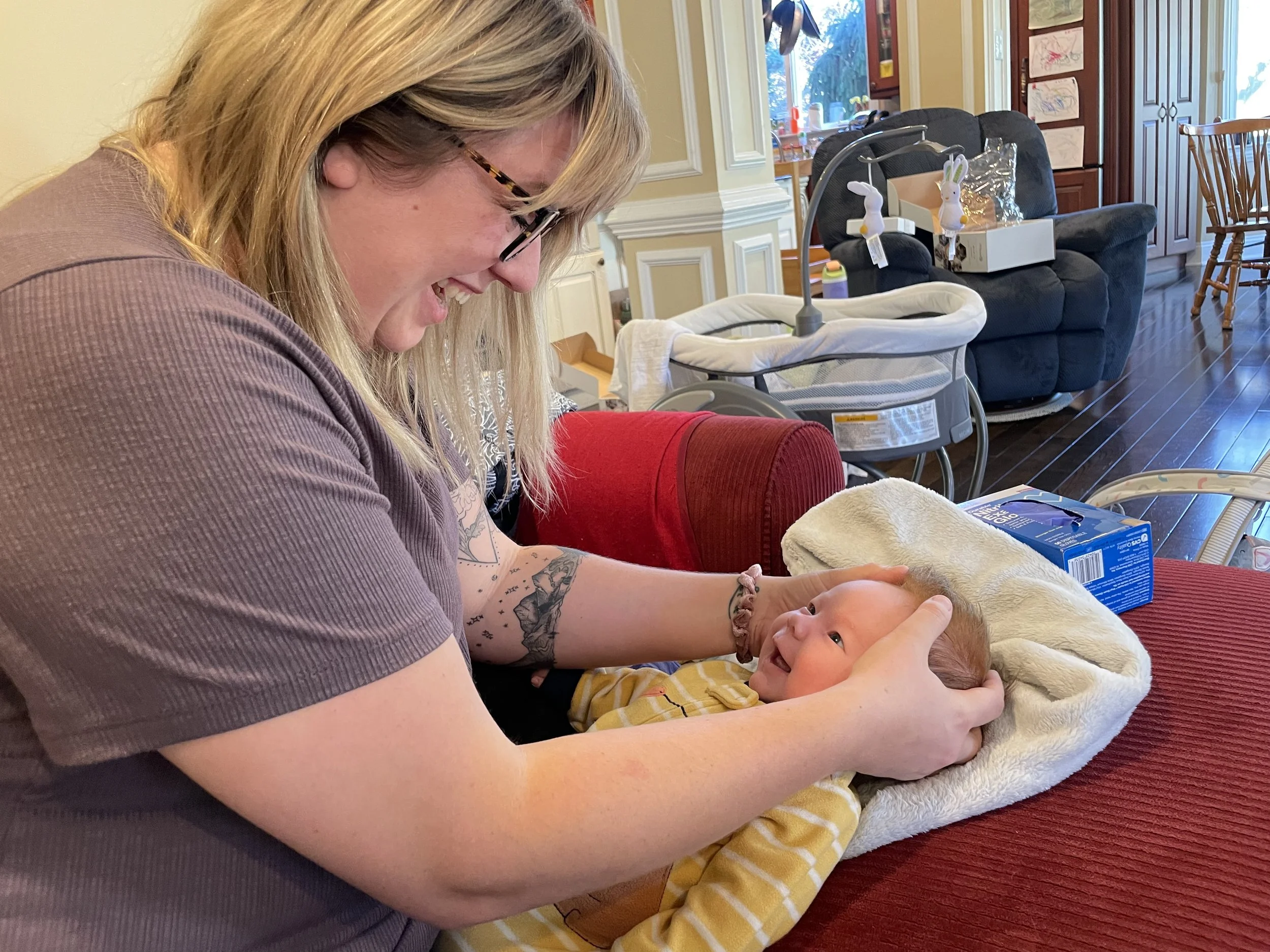
Babies
From birth through about 8 months. Being born is a big physical event however it happens, and small bodies carry tension from it. Common reasons parents come to us:
Feeding that takes more effort than it should, including a shallow latch or clicking
A strong preference for turning one way, or a flat area on the head
Stiffness, arching, or a body that is hard to fold and cuddle
Gas, spitting up, or trouble settling after feeds
Before or after a tongue tie or lip tie release
The work is very light and very slow. You can read more about our work with babies here.
Frequently Asked Questions
-
For women
Not usually, but it can definitely be uncomfortable at times. The pressure is light and sustained rather than deep. Some restricted areas feel tender as they release, and you can ask us to ease off at any point without explaining why.
For infants
We use a combination of John Barnes Myofascial Release & craniosacral techniques, which are both incredibly gentle and soft.
-
Something you can move comfortably in. Athletic pants or shorts and a top you do not mind having lifted at the back or sides. You stay in your own clothing throughout or undress to comfort.
-
Yes. We work with women right through pregnancy, and positioning is adjusted for each stage.
We also have a table that you can lay facedown in, which pregnant women find to be lovely.
-
That happens, and it is welcome here. Bodywork can bring up feelings, particularly around a difficult birth, a long history of pain, or years of not being listened to. There is no wrong reaction, and we will follow your lead.
-
No. Luma is a private practice. You pay directly, and you do not need a referral.
-
Check out our Client Information & Rates page for more information on pricing.
-
Absolutely, that’s how Luma works! Rather than separating out myofascial release and personal training, we see them as tools that work beautifully together. Each session can include both, or one, or can change at the last minute depending on how you’re feeling or what your goals are that day.
Reach Out Today
Not sure if this is the right fit? Ask us anyway!
We’d love to chat with you and find out more about how we can help.